

 24 November, 2025
Technology center Lortek and DGH, a company of Groupe ADF, have developed an advanced process control solution for metal additive manufacturing using laser-based directed energy deposition (DED-LB). The innovation, part of the Tecmadiva project, combines model predictive control (MPC) with a real-time layer height measurement system, aiming to improve accuracy and efficiency in industrial applications.
Layer geometry control remains a key challenge in Laser Metal Deposition (LMD/DED-LB) processes. Unlike traditional approaches relying on PID controllers or manual adjustments, the implemented MPC system dynamically regulates key parameters such as laser power and deposition speed by anticipating thermal and geometric behavior during the build process.
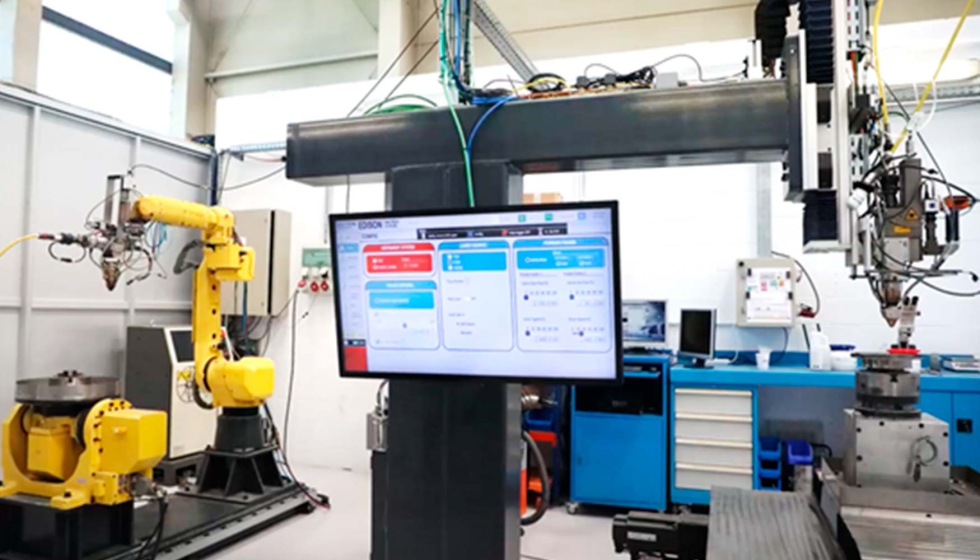
Tests conducted at Lortek’s flexible DED-LB robotic cell —featuring Cartesian and multi-axis robotic kinematics with multimaterial powder feeding— confirmed that MPC delivers more uniform layers, reduced surface waviness, and increased energy and material efficiency.
To complement the control system, a precise real-time layer height measurement tool was developed using a laser profilometer integrated into the deposition head. After each deposited layer, the surface is scanned and a 3D topographic map is generated, allowing real-time adjustment of the standoff distance. This parameter is crucial to maintain laser focus, ensure proper powder cone geometry, and optimize deposition efficiency.
DGH contributed by adapting its robot path-planning software, Trajectory Manager, to DED-LB processes. The software now automates robot trajectory control without the need for advanced programming and has been integrated into the system’s HMI, enabling operators to monitor and adjust parameters like laser power and Z-axis position in real time.
The solution features a modular, equipment-agnostic architecture, compatible with both robotic cells and CNC machines. It is designed for seamless integration with industrial data platforms and Edge/Cloud/Hybrid computing environments, in line with current digital manufacturing trends.
Key technical outcomes:
This development marks a significant step toward smart metal additive manufacturing, enabling adaptive, self-regulated processes with higher efficiency, reduced waste, and enhanced digital traceability. Future plans include expanding the system to other DED technologies (e.g., arc or wire-based) and adapting it for diverse materials and geometries, with potential applications across aerospace, energy, industrial machinery, and tooling sectors.
Subscribe to our newsletter. Just insert your e-mail and you will receive the latest news.